Authority
Why Authority Reduces Uncertainty Before the Sales Call
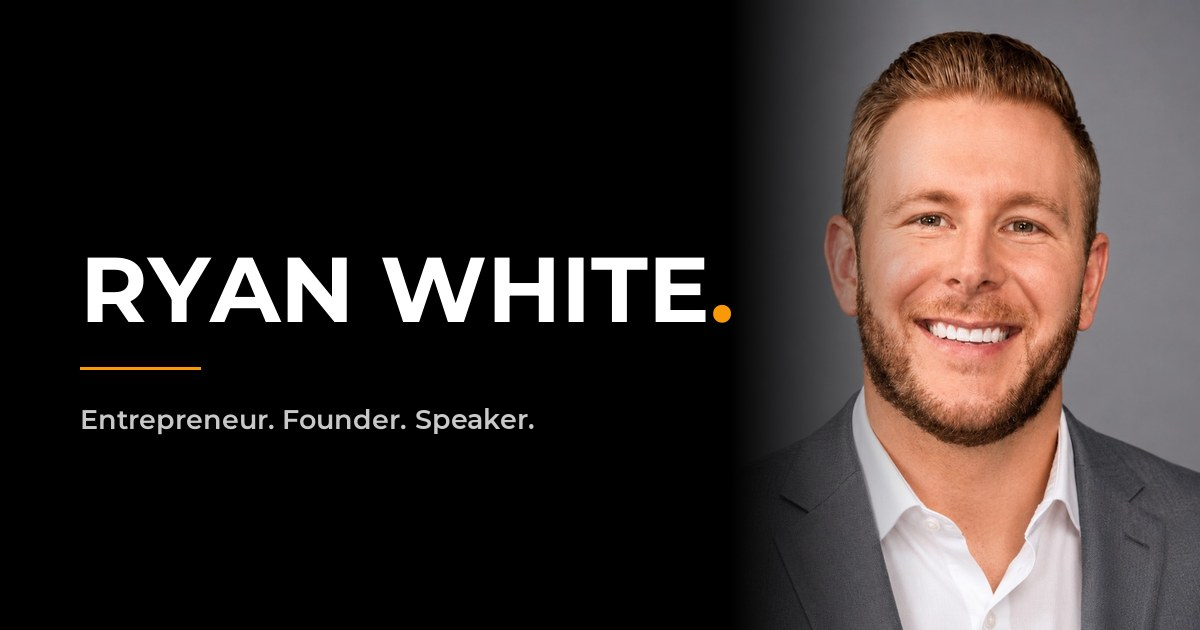
Entrepreneur Ryan White explains why visible proof reduces buyer uncertainty and helps the right prospects arrive with confidence before a call.
The best sales conversations often begin before anybody gets on a call.
A prospect sees your name, reads something you wrote, looks through your website, checks your social profiles, finds an interview, and studies the evidence around your work. By the time you speak, that person has already formed a view about your relevance and credibility.
That is why I believe one of the most important functions of authority is simple:
Authority reduces uncertainty.
It does not force people to buy. It helps the right people feel more confident about evaluating you.
People buy confidence before they can evaluate capability
Most buyers cannot fully judge technical capability before making a decision. A founder hiring a specialist may not know every detail of that specialist’s craft. A conference organizer may not know how a speaker will perform until the event. A client evaluating an agency cannot see the future.
So people look for signals.
They ask whether the expert communicates clearly, has relevant experience, can document results, appears in credible settings, and tells a consistent story. Each signal removes a little uncertainty.
This does not mean perception matters more than substance. Sustainable authority requires both. Substance without visible signals is difficult to evaluate; signals without substance eventually collapse.
The goal is alignment between the reputation you have earned and the evidence people can actually see.
Evidence should do the persuading
Weak credibility language relies on adjectives: best, leading, world-class, revolutionary.
Strong credibility relies on proof that a visitor can inspect.
For me, that includes a public archive of press, podcast, and television appearances, a detailed media library with the stories behind the interviews, and a page where I document specific business milestones and supporting receipts.
The principle is broader than my own site. Your proof might include:
- A case study with a clear before, process, and after
- A portfolio that shows the actual work
- A testimonial tied to a specific outcome
- A respected publication that features your expertise
- A credential that matters in your field
- A thoughtful article that demonstrates your judgment
- A track record that can be independently verified
The point is not to place every accomplishment above the fold. It is to make relevant evidence easy to find when someone looks for it.
Trust can transfer
When a respected client, publication, organization, or interviewer chooses to associate with you, part of that existing trust can transfer.
I call this the Trust Transfer Principle.
A Forbes contributor profile, a recognized podcast interview, or a detailed client story can help a new visitor interpret you faster. The signal works because the third party already has meaning in the visitor’s mind.
But trust transfer only works when it is accurate. A logo without context, an exaggerated relationship, or a vague claim creates more uncertainty, not less.
Whenever you use outside validation, answer three questions:
- What exactly happened?
- Can the visitor verify it?
- Is the association relevant to the decision they are making?
Clear context is stronger than borrowed prestige.
Make the proof easy to follow
Many credible people have evidence, but it is scattered across old posts, inboxes, video links, and forgotten pages. A prospect would have to conduct an investigation to understand the full story.
That creates unnecessary friction.
Organize proof around the questions a serious buyer asks:
Have you solved a problem like mine?
Use case studies organized by starting point, challenge, approach, and result.
Do you understand this subject deeply?
Publish teaching that explains your reasoning, not only surface-level tips.
Have credible people trusted you?
Create a clean media, client, or speaking archive with links to original sources.
Are your claims real?
Document important claims with dates, records, screenshots, original links, or third-party confirmation.
What should I do next?
Give the visitor one clear next step. Proof without direction can create admiration without action.
The goal is a better conversation
Authority is not supposed to eliminate the need for a real conversation. It should improve the conversation.
When the evidence is clear, you spend less time proving that you belong in the room and more time deciding whether there is a real fit. The prospect can ask better questions. You can talk about goals, constraints, expectations, and the work itself.
In other words, visible authority can finish much of the trust-building before the sales call begins.
Add one signal this week
Choose the place where prospects are most likely to evaluate you - your homepage, Instagram profile, LinkedIn profile, proposal, or booking page.
Then add one signal that reduces uncertainty:
- Clarify your positioning sentence.
- Link to a detailed case study.
- Add context to a media feature.
- Organize testimonials by problem and result.
- Publish an article that answers a difficult question buyers ask.
- Replace an unsupported adjective with a verifiable fact.
Do not try to look more important. Make the truth easier to evaluate.
That is what authority is for.